



AUA 2026: Robots, Telesurgery, Global Equity Delivered


The American Urological Association (AUA) 2026 meeting brought the field together this week with a clear signal of where urology is heading. Robotic surgery dominated the agenda, from expansive exhibition floors to the packed Robotics Theater, with sessions spanning the clinical debut of next-generation force-feedback systems to the jaw-dropping realities of transcontinental telesurgery. While the industry continues to spotlight increasingly sophisticated hardware, the real work of transforming patient outcomes is happening in the gap between innovation and implementation. The latest operational breakthroughs and clinical discussions are not simply a technical overview of mechanical precision. They are a roadmap for how intelligence in medicine must evolve beyond standard operating room walls and into systems that can actually reach patients worldwide.
Advanced surgical platforms and cross-border connectivity are becoming the pillars of modern urological care, but the current math of innovation still does not add up for most patients. Intuitive Surgical’s Da Vinci systems have long optimized prostatectomy workflows, allowing surgeons to operate with micron-level precision and improving patient recovery curves. These are not marginal gains; they represent a fundamental shift in how localized disease is excised and managed. Yet, as highlighted throughout AUA sessions focused on global health equity and care access, these advances remain unevenly distributed. The technology is accelerating, but access to it is not.
The presentations at AUA 2026 made it clear that robotic urology is following a trajectory forged by visionary pioneers. This was beautifully codified on the main stage in Washington, D.C., when Dr. Mani Menon was awarded the prestigious Ramon Guiteras Award, which is the AUA's highest honor bestowed upon an individual for outstanding, pioneering contributions to the art and science of urology. Dr. Menon and his team at the Vattikuti Urology Institute at Henry Ford Hospital developed the world’s very first robotic prostatectomy. Known initially as the Vattikuti Institute Prostatectomy and continually revised into what is now recognized as the Menon Precision Prostatectomy, this technique changed the surgical landscape forever.
Dr. Menon’s pioneering contributions in robotics created the very paradigm shift we operate within today for the surgical treatment of prostate cancer, noted colleagues and leadership from the Vattikuti Foundation during the celebration. By taking what was once a highly invasive open surgery and reimagining it through a robotic lens, Dr. Menon laid the foundational infrastructure. However, the recurring theme of the 2026 meeting wasn't just to look back at where the paradigm began, but to address why widespread clinical adoption of modern offshoots remains constrained by geography and socioeconomic boundaries. Models that perform well in high-resource, major academic centers often remain entirely out of reach for rural communities or developing nations. This is not a failure of the technology; it is a reflection of the systemic barriers into which it is being deployed.
At the center of this technological evolution is Intuitive's new Da Vinci 5 robotic platform, which made a major splash during clinical data presentations. Dr. Neeraja Tillu from Mount Sinai Hospital shared highly anticipated, prospective data from the first 62 consecutive robot-assisted radical prostatectomy cases performed on the new system by a single, high-volume surgeon between June and October 2025. The headline advancement of this platform is its integrated force feedback technology, alongside enhanced 3D visualization and redesigned ergonomics designed to reduce tissue trauma.
The real-world numbers from Dr. Tillu's cohort showcase a remarkably efficient clinical translation. The mean console time was 146 minutes, while the average estimated blood loss remained low at 232 mL. Early continence recovery was encouraging, with 68 percent of patients achieving continence at just 6 weeks postoperatively, which was defined as requiring zero to one pads per day. Furthermore, a learning curve analysis demonstrated that operative times stabilized within just the first 20 cases, proving that experienced robotic surgeons can adapt to the new system with remarkable speed.
During a packed Q&A session, Dr. Tillu confirmed that the force feedback technology, most commonly utilized on a low setting, tangibly improved surgical technique by allowing more efficient tissue dissection and preservation of precise anatomical planes. Cases utilizing Grade 1 nerve-sparing demonstrated shorter operative times, lower blood loss, and significantly better early erectile and continence recovery, all while maintaining strict oncologic safety.
While the new console refines precision inside local operating rooms, other visionaries are pushing those walls out entirely. On Saturday, attendees packed into the Robotics Theater to hear a presentation by Dr. Vipul Patel, a Fellow of the American College of Surgeons and medical director of the Global Robotics Institute at AdventHealth Celebration. Dr. Patel captivated the audience by breaking down his historic human clinical trial from 2025, which was recently named one of the top medical breakthroughs of the year by ABC News.
In June 2025, Dr. Patel completed the longest-distance telesurgery ever recorded. Operating from a console at the Nicholson Center in Celebration, Florida, he performed a flawless robotic radical prostatectomy on a 67-year-old patient with prostate cancer located 7,000 miles away in Angola. This historic operation was the first human clinical trial approved by the US Food and Drug Administration to test transcontinental robotic telesurgery.
To make this feat possible, the telesurgery relied on high-speed data transmission along a dedicated 10,000-mile network of direct fiber optic cables running from Orlando to Miami, down through Brazil, and across the Atlantic to Angola. Despite the immense geographical span, Dr. Patel reported that there was absolutely no perceptible delay between his actions on the Florida console and the mechanical responses in the African operating room. While an expert local surgical team stood by in Angola to monitor for potential issues, none arose, and the patient experienced a highly successful outcome.
This achievement marks the first US-based transcontinental telesurgery performed since the historic 2001 Lindbergh Operation by Dr. Jacques Marescaux, a feat that was prohibitively difficult to replicate with the nascent telecommunications of that era. Beyond this experimental milestone, Dr. Patel also reached an unparalleled landmark in late 2025 by completing his 20,000th robotic-assisted prostatectomy, which represents the most of any surgeon worldwide and anchors his insights in immense clinical authority.
However, this same body of work highlights the risks of scaling these systems without deliberate intent. Telesurgery and advanced robotic platforms require robust regional infrastructure. Tools developed in hyper-connected, high-resource environments must be systematically paired with local training, early detection initiatives, and safety protocols to protect patient outcomes. Without a deliberate focus on equity, the gap between those who benefit from automated or remote surgical innovation and those who do not will continue to widen.
This is where the conversation at the AUA Robotics Theater becomes more important than the technology itself. The challenge is no longer whether we can build high-fidelity surgical arms with force feedback or transmit command data across oceans. This first-of-its-kind FDA-approved clinical trial is a stunning breakthrough not just technologically but in advancing global health equity, Dr. Patel shared. He noted that it was a small step for a surgeon but a huge leap for healthcare, marking a critical step toward delivering high-quality surgical care to remote rural and underserved communities that have long lacked access.
The future of urology will not be defined by isolated engineering breakthroughs, but by how effectively those breakthroughs are distributed. As the field looks past 2026, we are no longer asking whether robotics belongs in urology. That question has long been answered. The focus now is on building the collaborative frameworks, telecom partnerships, and training models that can carry that surgical intelligence from the convention floor to remote clinics, from high-resource hubs to underserved communities, and from theoretical potential to measurable global outcomes. We are moving beyond the era of proving what a robot can do, and into the more difficult, humanitarian work of ensuring it does it for everyone.
The future of urology is not just about smarter tools. It is about making sure those tools reach every patient who needs them, bringing specialized surgery closer to home and family support, no matter how far care once felt out of reach.
You can explore the clinical and technical framework presented at the meeting through the original urological reporting via UroToday. You can also learn more about Dr. Menon's lifetime achievements via the Vattikuti Foundation announcement, read about the groundbreaking global telesurgery milestones at AdventHealth Celebration, and review the surgical perspective and historic legacy via the American College of Surgeons.
The American Urological Association Annual Meeting is the world's premier urological community gathering, showcasing groundbreaking research, new guidelines, and the latest technological advancements in the field. The 2026 meeting brought together thousands of global experts to share insights across oncology, endourology, robotics, and pediatric urology. More information can be found at www.auanet.org
References:
- Tillu N. Early Experience with the Da Vinci 5 System: Surgical Efficiency and Functional Recovery Using a Force-Feedback Robotic Platform. Presented at: American Urological Association Annual Meeting; May 15, 2026; Washington, DC.
- Vattikuti Foundation. Mani Menon To Receive AUA Ramon Guiteras Award. published January 7, 2026.
- Starinsky A. Expanding access to care through record-setting remote robotic surgery at AdventHealth Celebration recognized by ABC News. AdventHealth News. published January 2, 2026.
- American College of Surgeons. Fellow Leads Groundbreaking Prostatectomy on Patient 7,000 Miles Away. ACS Brief. published June 24, 2025.
Experience a smarter way to source endoscopy equipment—all in one place.
✔ Wide selection of trusted endoscopy brands
✔ Competitive pricing without compromising quality
✔ Fast, reliable access to the tools you need—when you need them
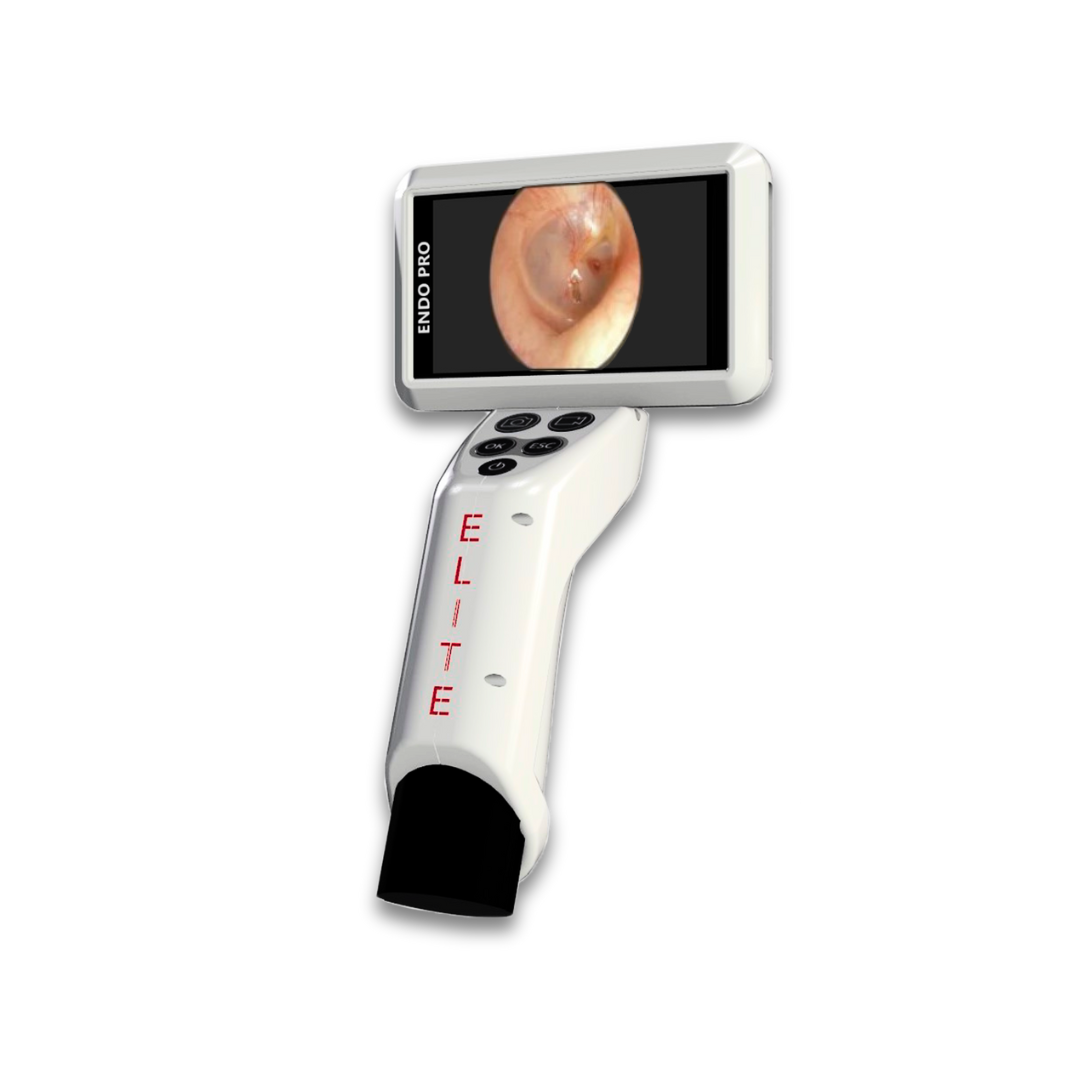
👉 Explore how EndoPro® 3D can transform your surgical technique.

Disclaimer: All product names, logos, brands, and trademarks displayed on this website are the property of their respective owners and are used solely for informational and descriptive purposes. The appearance of any third-party trademarks does not imply any affiliation, endorsement, sponsorship, or authorization by the trademark holder. This ecommerce store and its product listings operate independently and are not affiliated with, authorized by, endorsed by, or officially connected to KARL STORZ, Medtronic, Olympus Corporation, Richard Wolf GmbH, Stryker Corporation, or any other trademark owners referenced on this site, including their respective subsidiaries or affiliates.